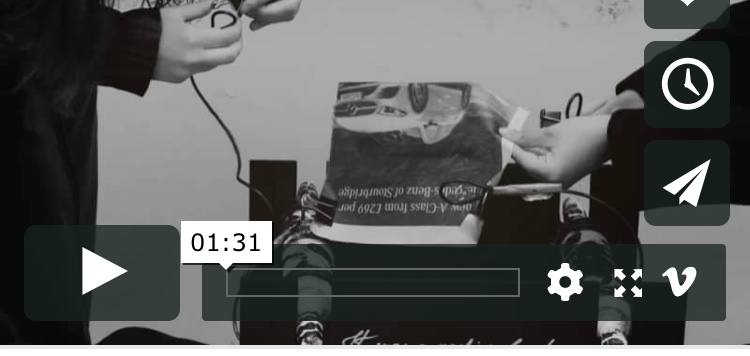
Watch the short film HERE
Watch the short film HERE
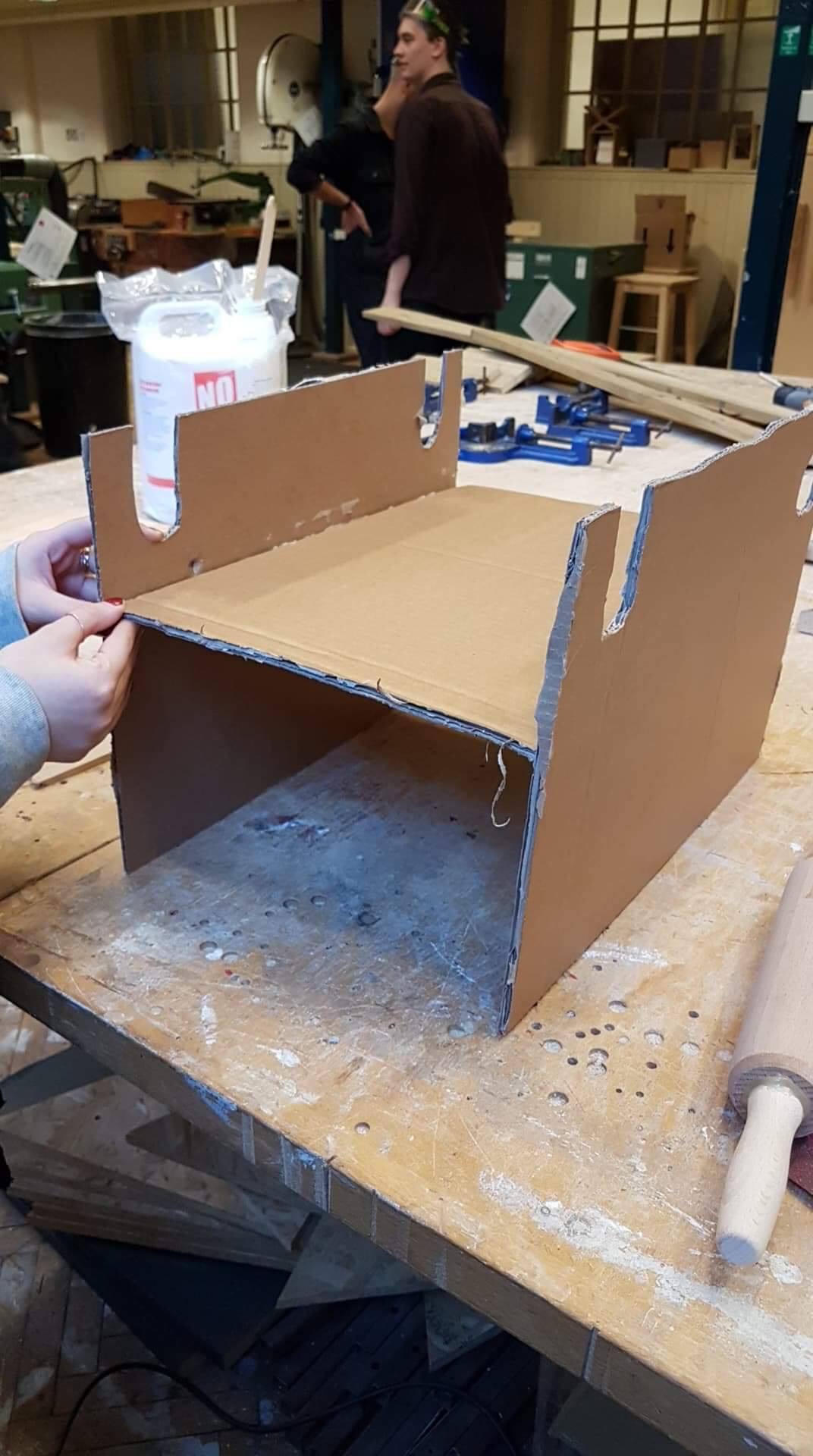
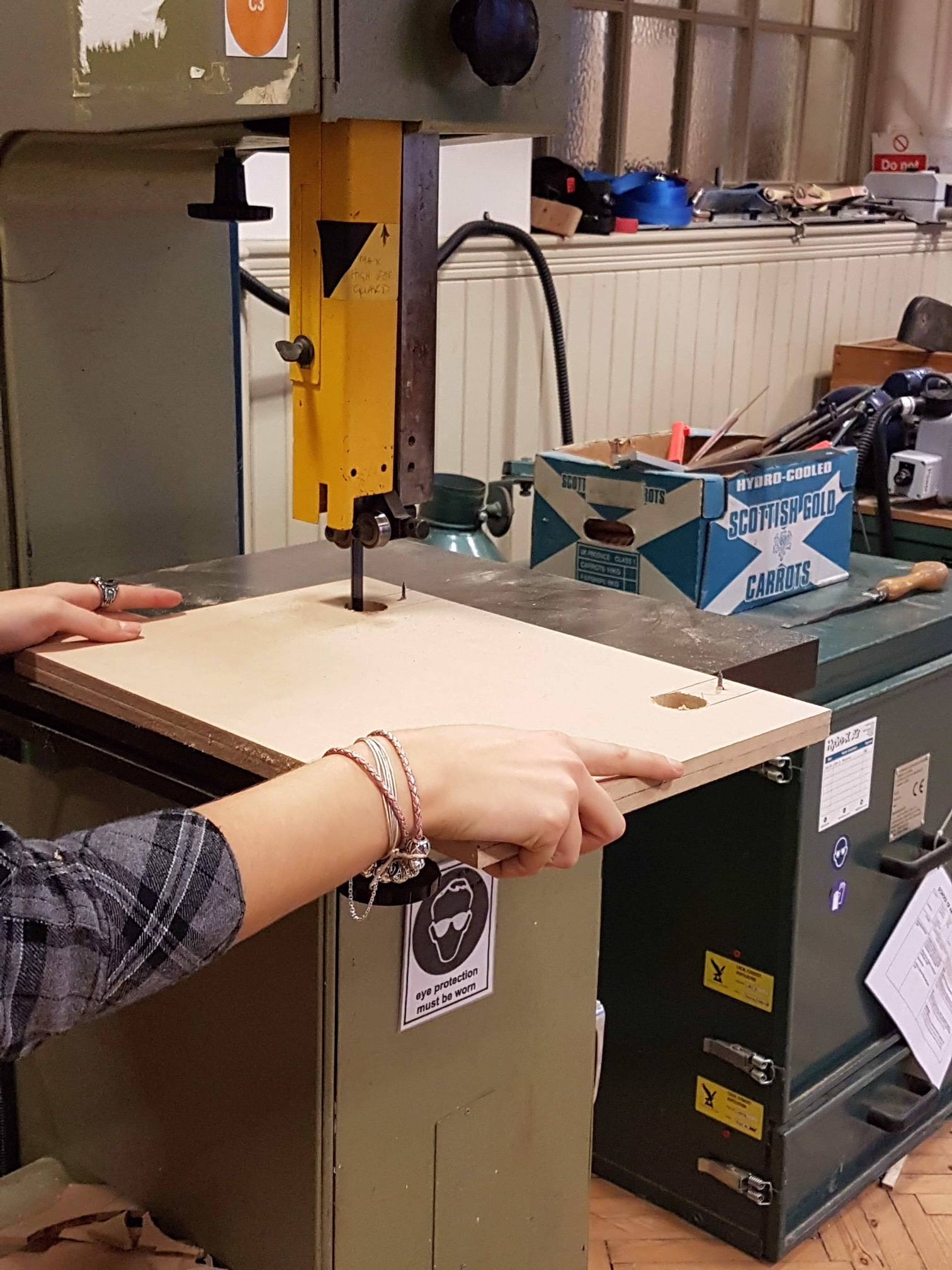
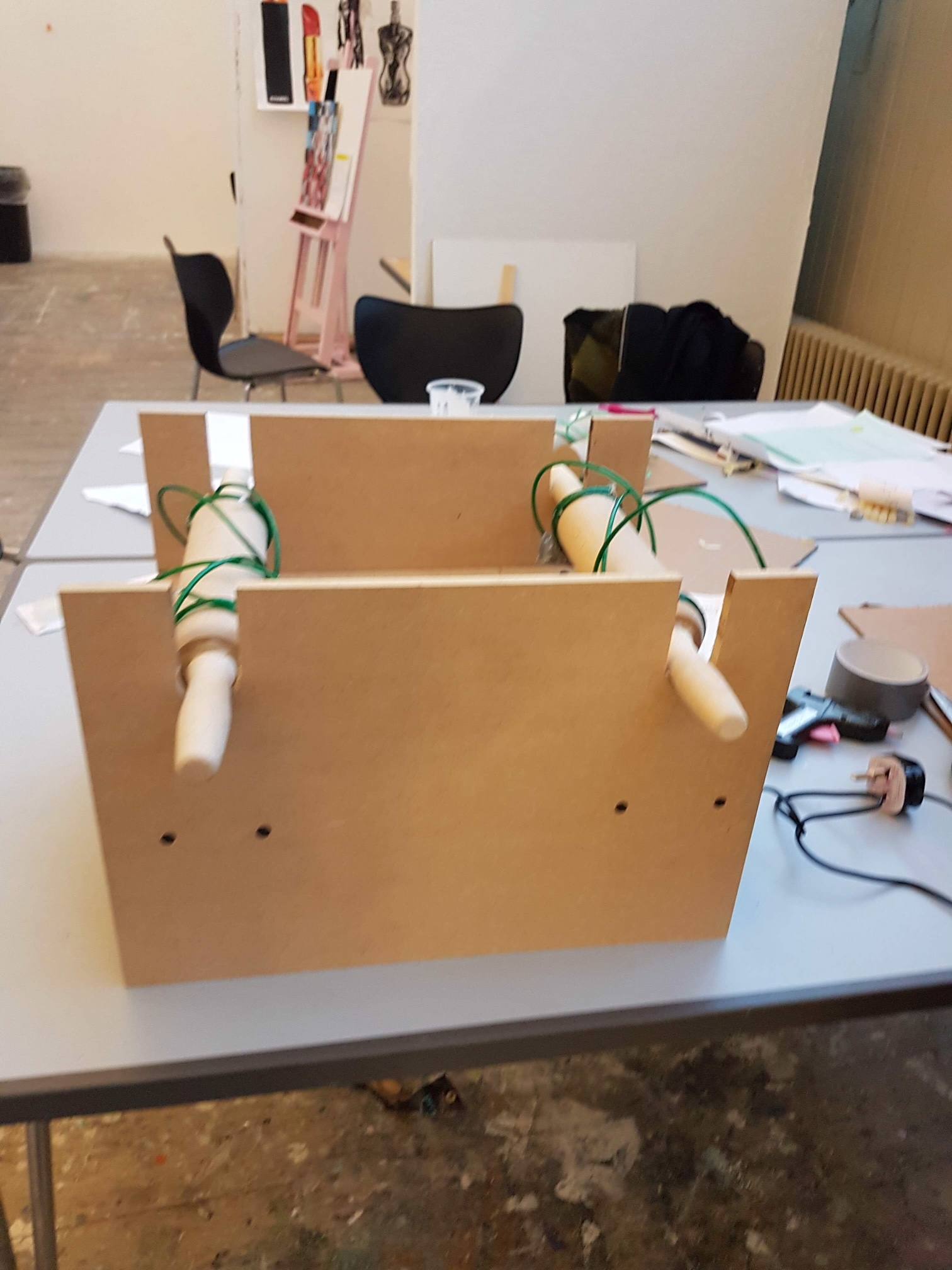
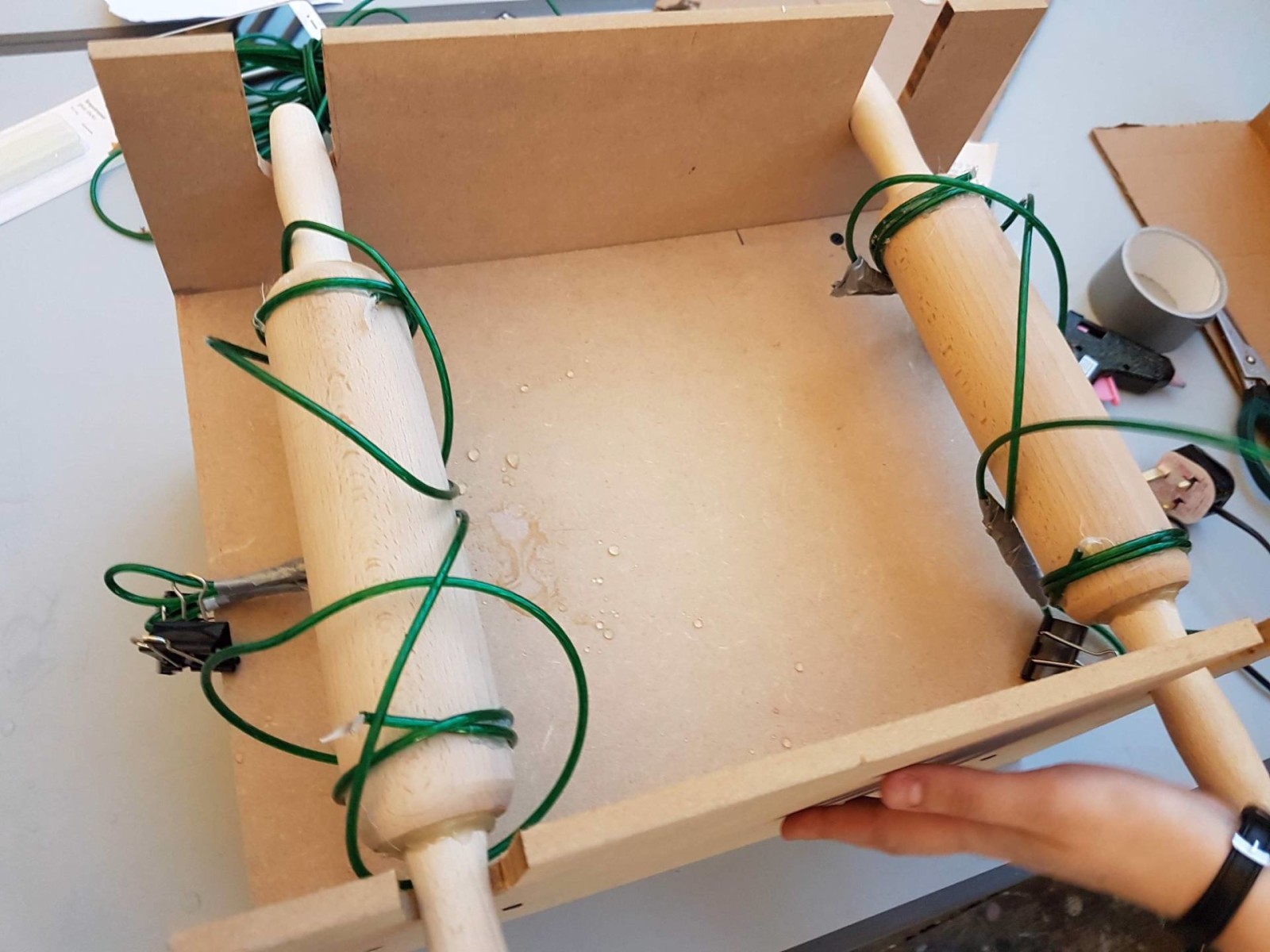
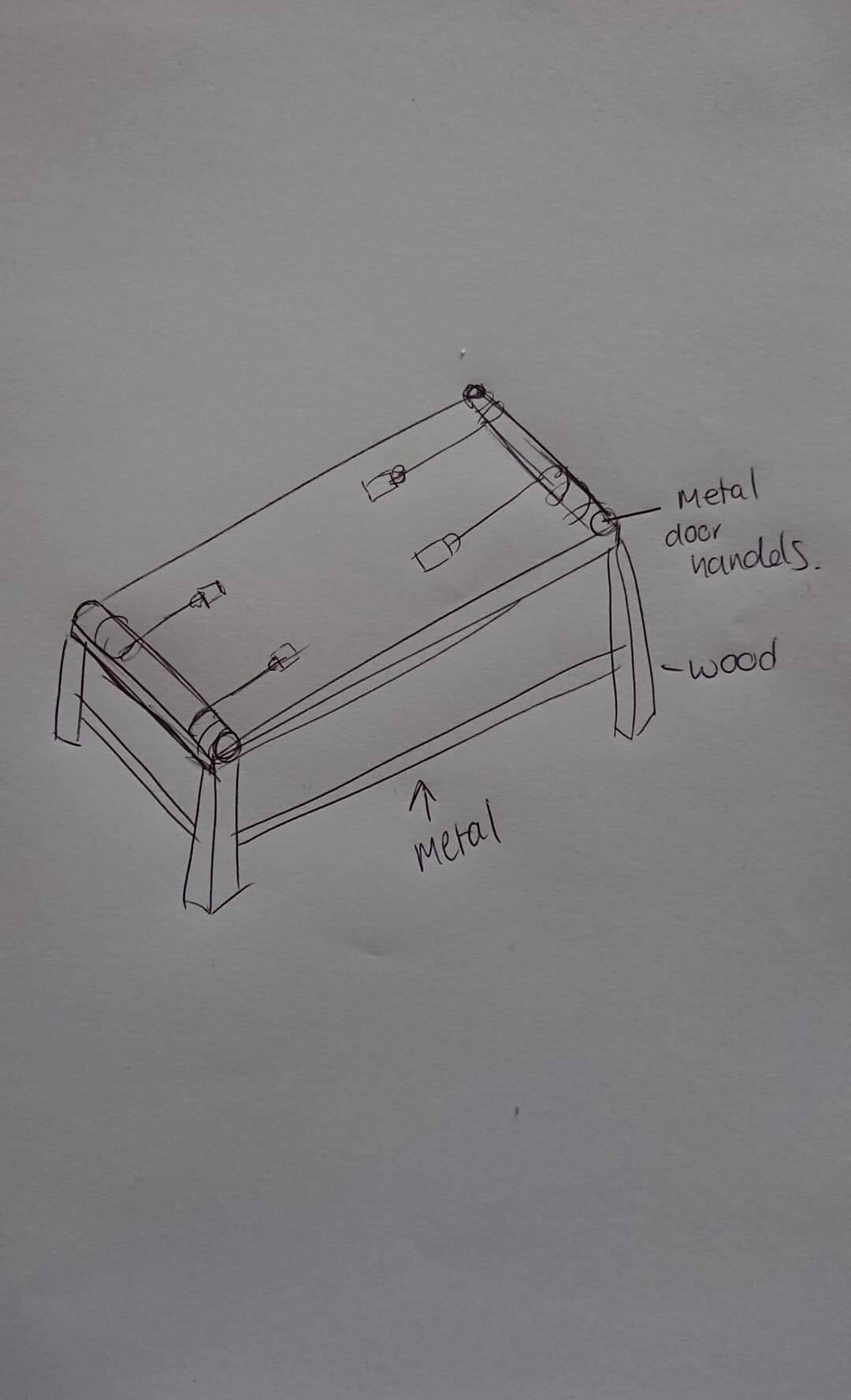
Before building the final machine out of wood, the prototype was modified further by eliminating two of the sides of the box and adding slots instead of holes for the rolling pins to rest in. The final design is uncomplicated and works effectively.
To make the build successful we had to be sure our measurements were accurate and choose to use the most suitable processes in the workshop.
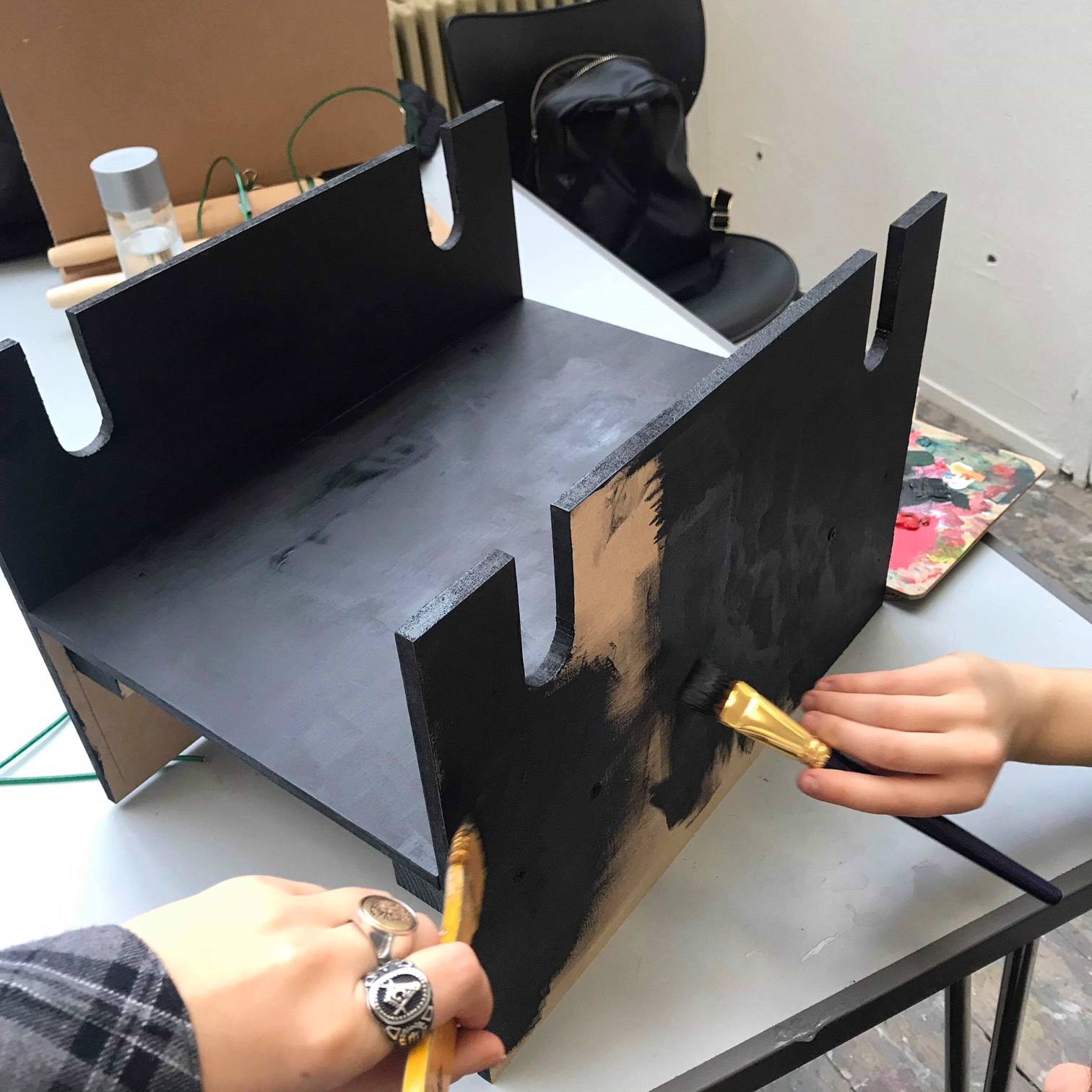
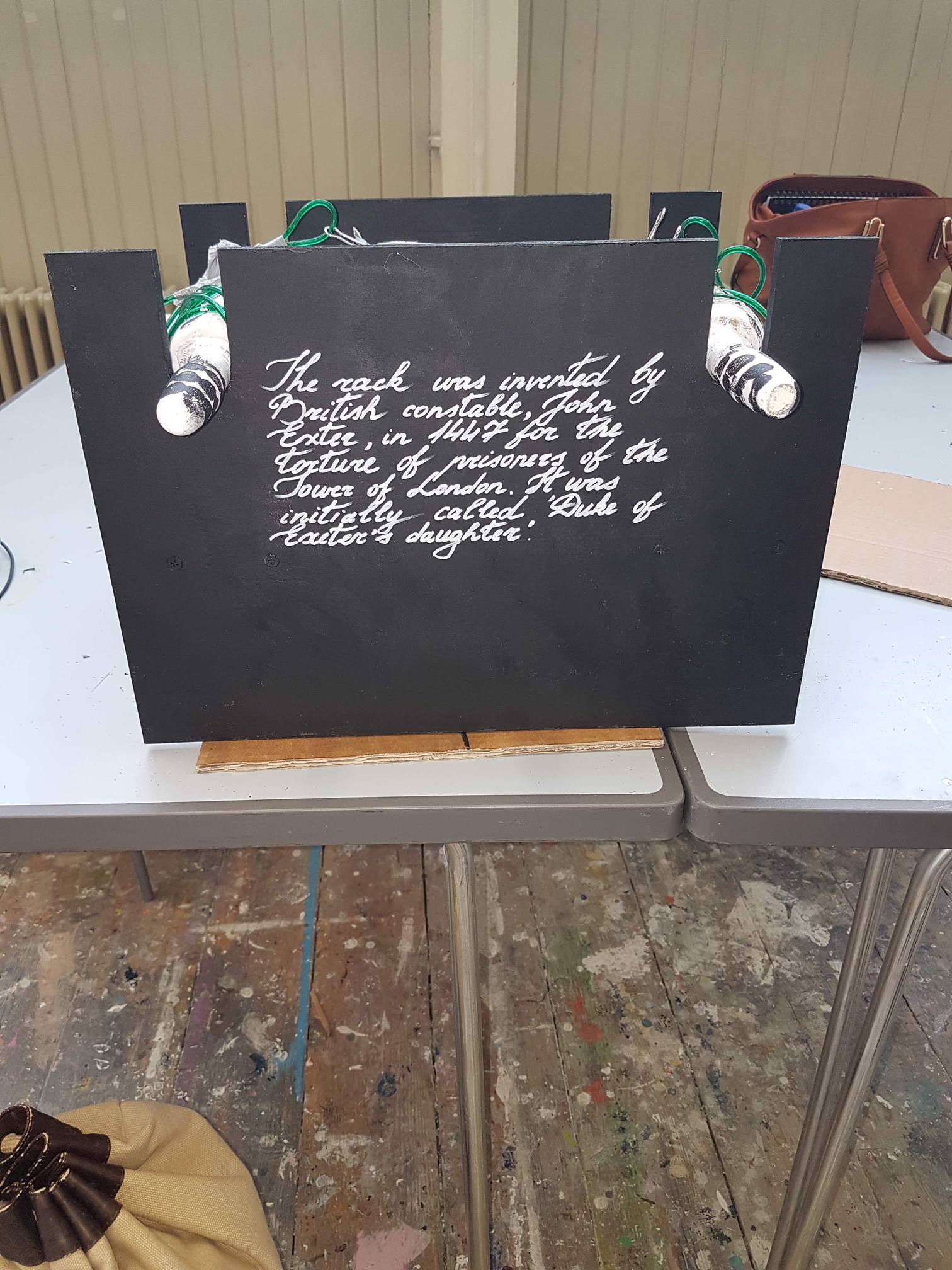
We made changes to the appearance of the machine with paint. A simple colour scheme of black and white was chosen and we made the decision to avoid the colour red as motifs such as blood splatters would be too cliched. Instead I think the way the scattered/smudged handprints in the rollers portrays a sense of desperation or gives the impression of the presence of a person.
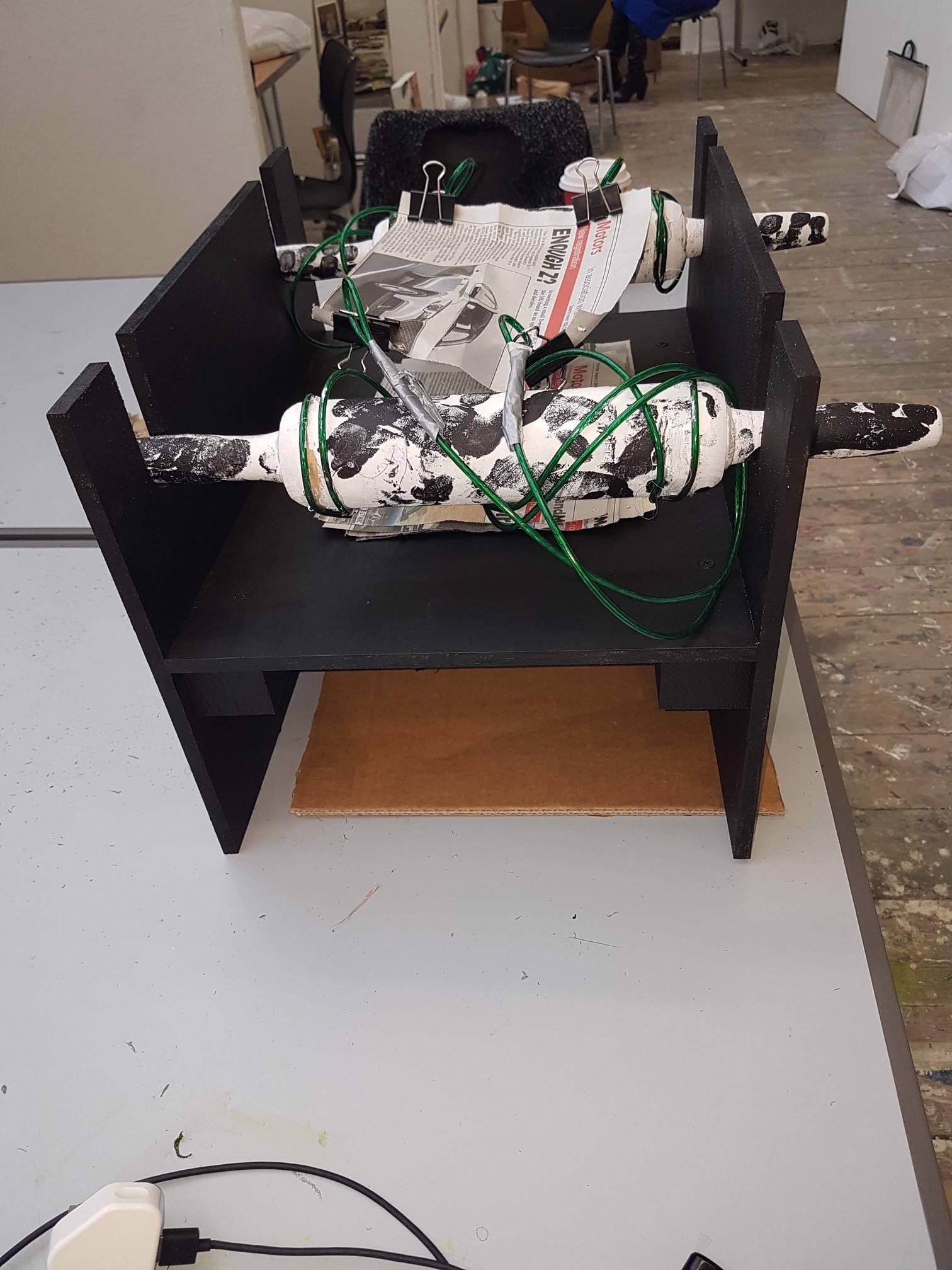

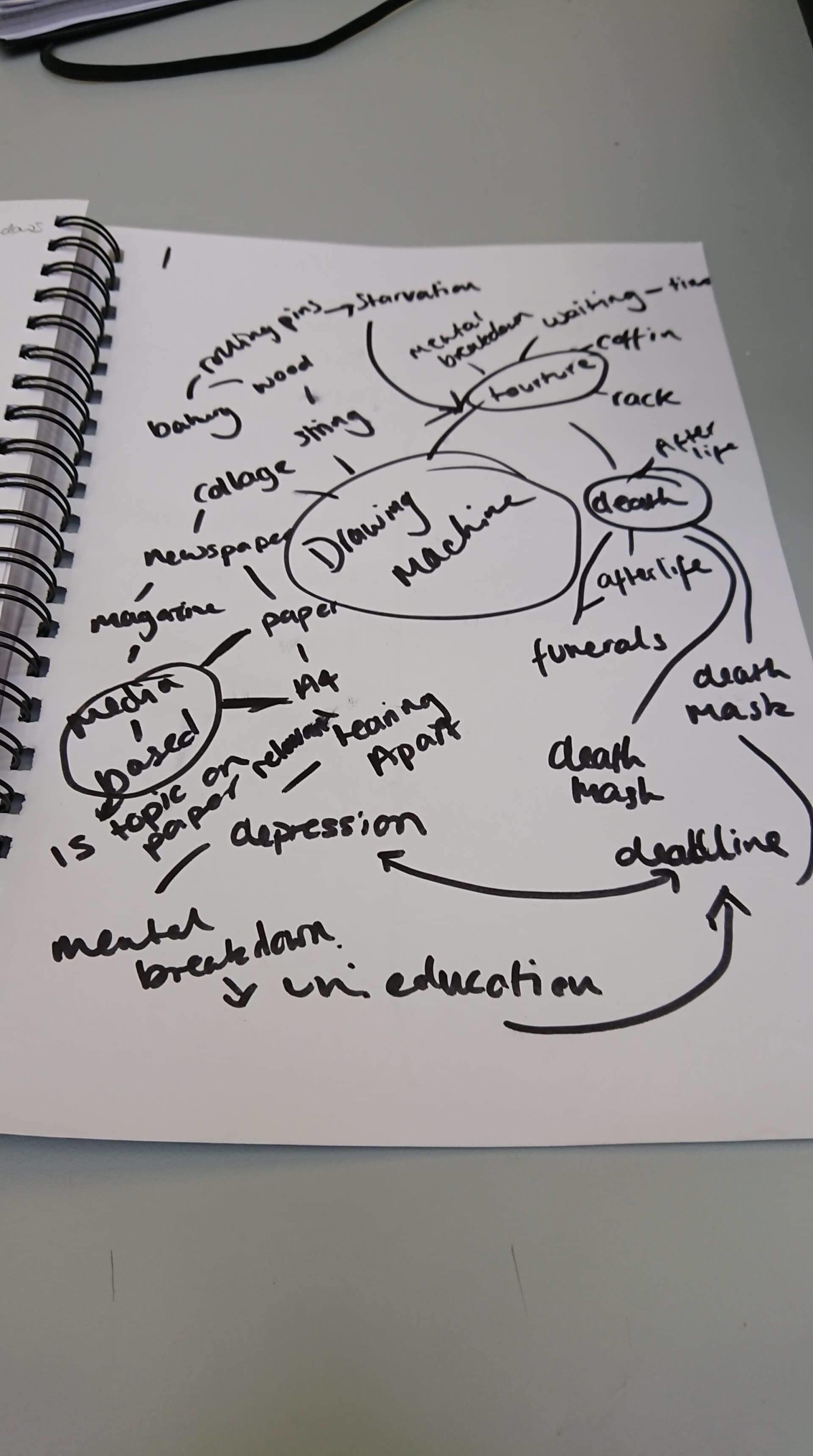
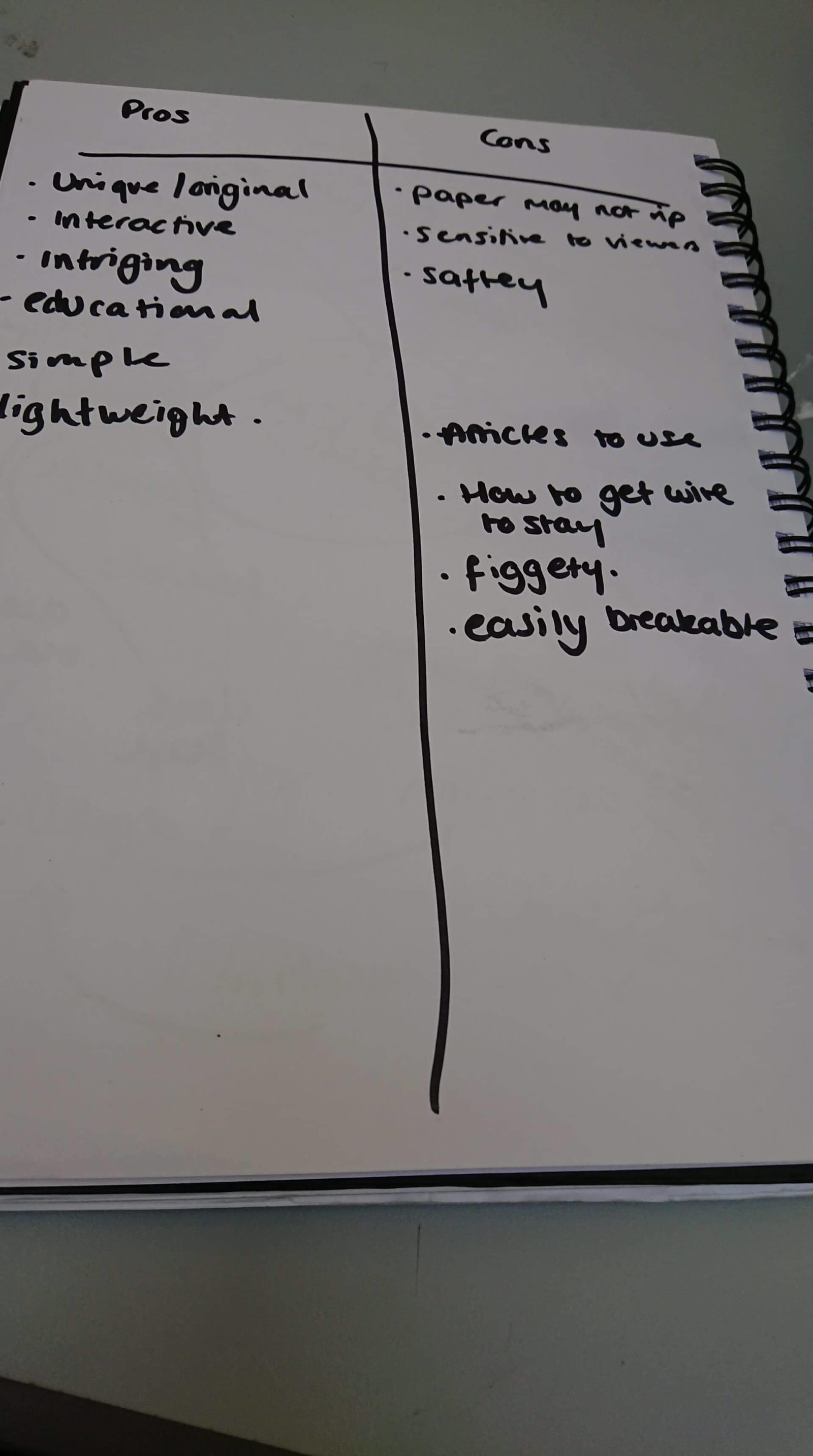
We collaboratively responded to the brief through initial conversations about what the term drawing machine could mean – drawing, mark making and paper manipulation. We created mind maps that originated with the question of how we could make marks on paper then further digging deeper exercises branched out into themes of torture and medieval torture devices.
The theme of medieval torture methods was interesting because it tied back perfectly with the initial discussions we had about how we could manipulate a piece of paper to make a mark through stretching and tearing.
Initially we ran with the idea of recreating the iron maiden out of wood with a body inside crafted out of balloons filled with paint and inks. The nails inside the door of the life-sized coffin shaped box would puncture the balloons and make marks/drawings within the confines of the box. I thought the way that the marks would be limited to the small space in which the balloons exploded was really interesting because confinement itself could be seen as a form of torture.
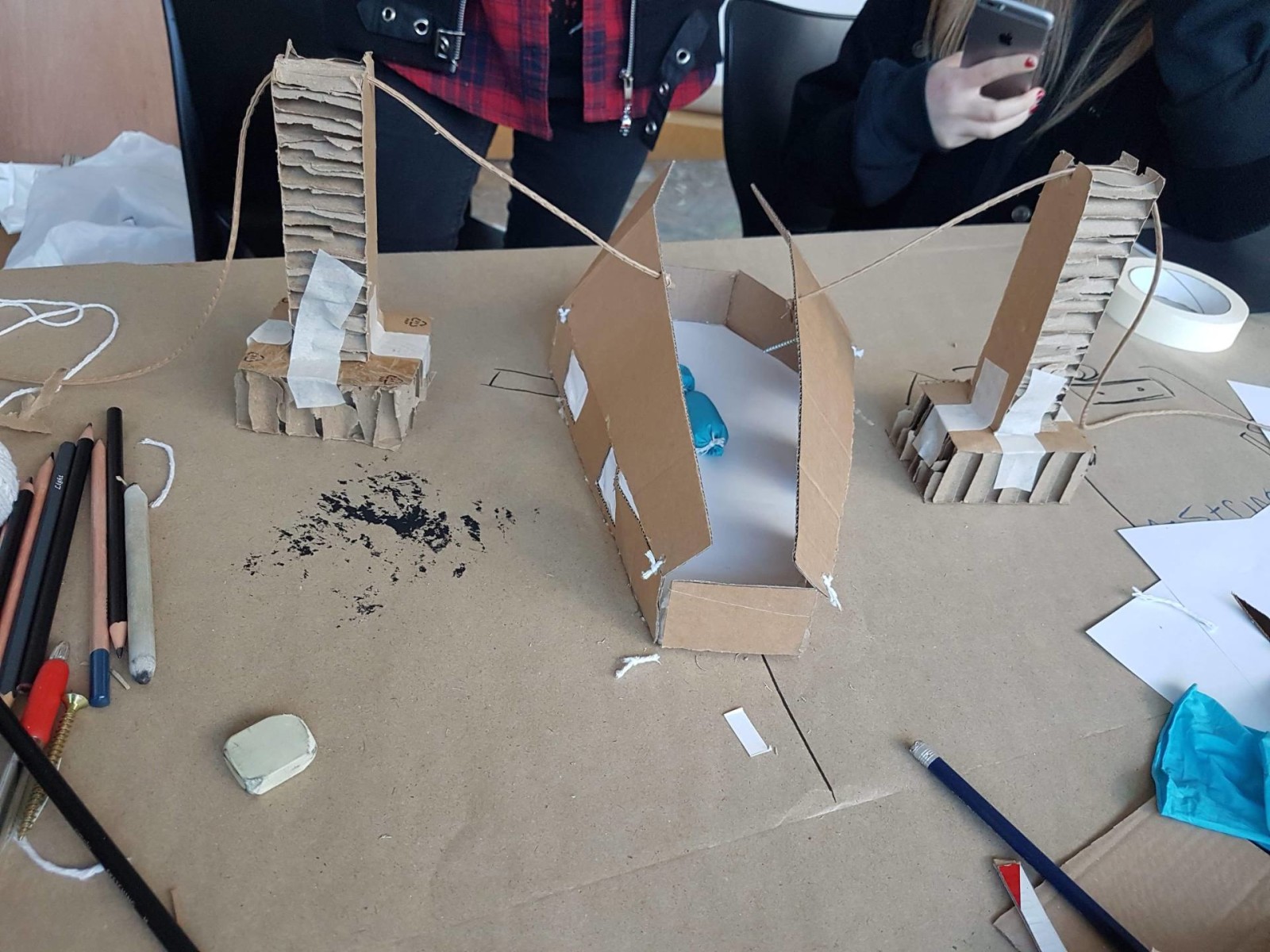
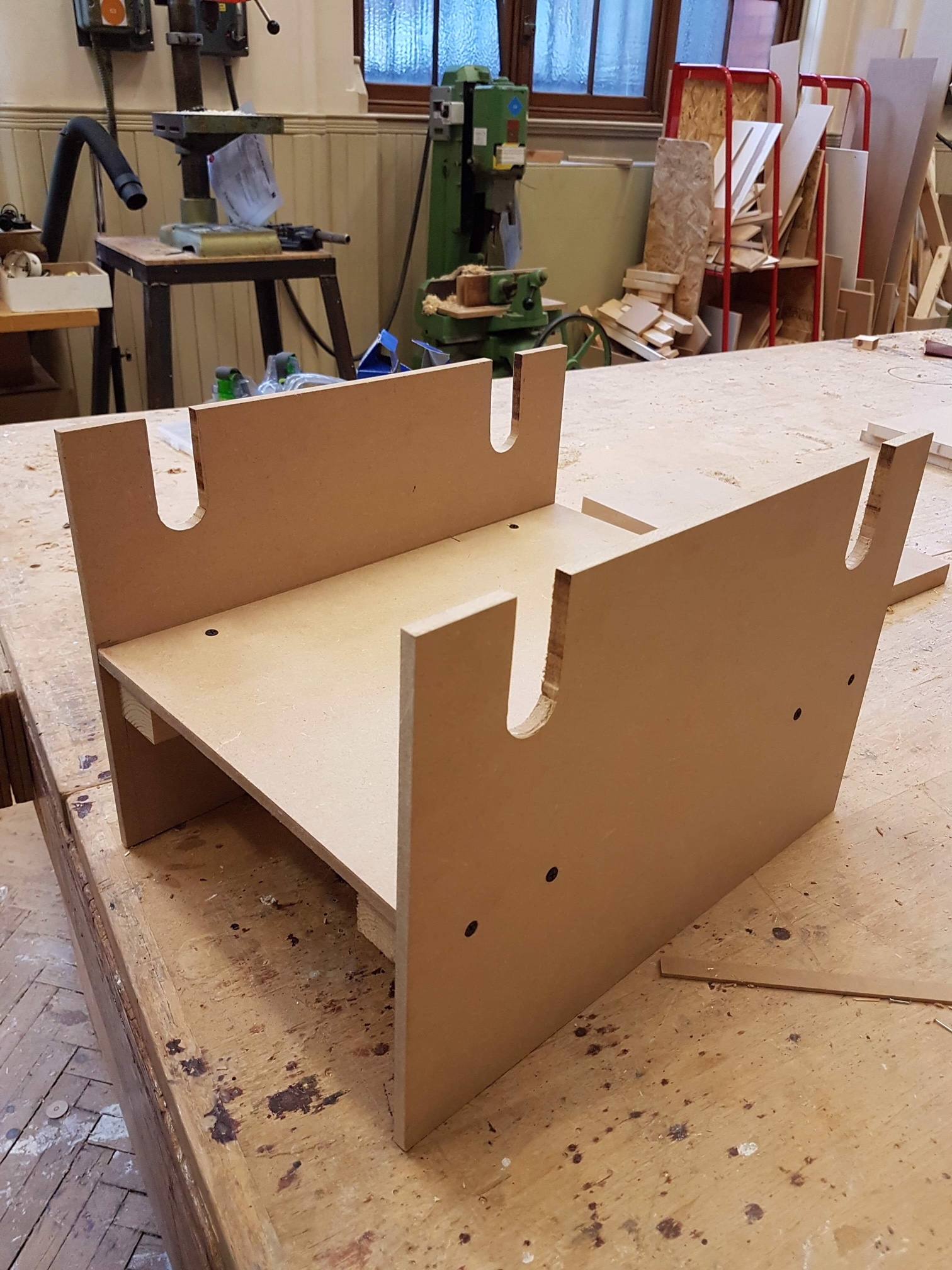
We made a prototype for this idea out of cardboard and other materials and through this process predicted a few problems with following through with the idea.
A life sized coffin would take a lot of time and resources to make and with the time scale and recourses we had it wouldn’t have been practical. Also we had to think about how the machine would translate on film and having the actual mark making process hidden inside the box doesn’t give us the ability to show it.
We could have adapted the idea to fit our deadline by making it much smaller in size however this would have made it much less theatrical and performative than we had envisioned it being.
Thinking retrospectively, if we had to make this idea work, a visually interesting way to execute it would be to make the box out of clear acrylic or something of that kind so that the process happening within the box can be seen from the outside, but also keeps the idea of confinement that we liked. It may also have been a stronger art piece because instead of making a recreation of something that has already existed, we would have been making something that is visually very different.
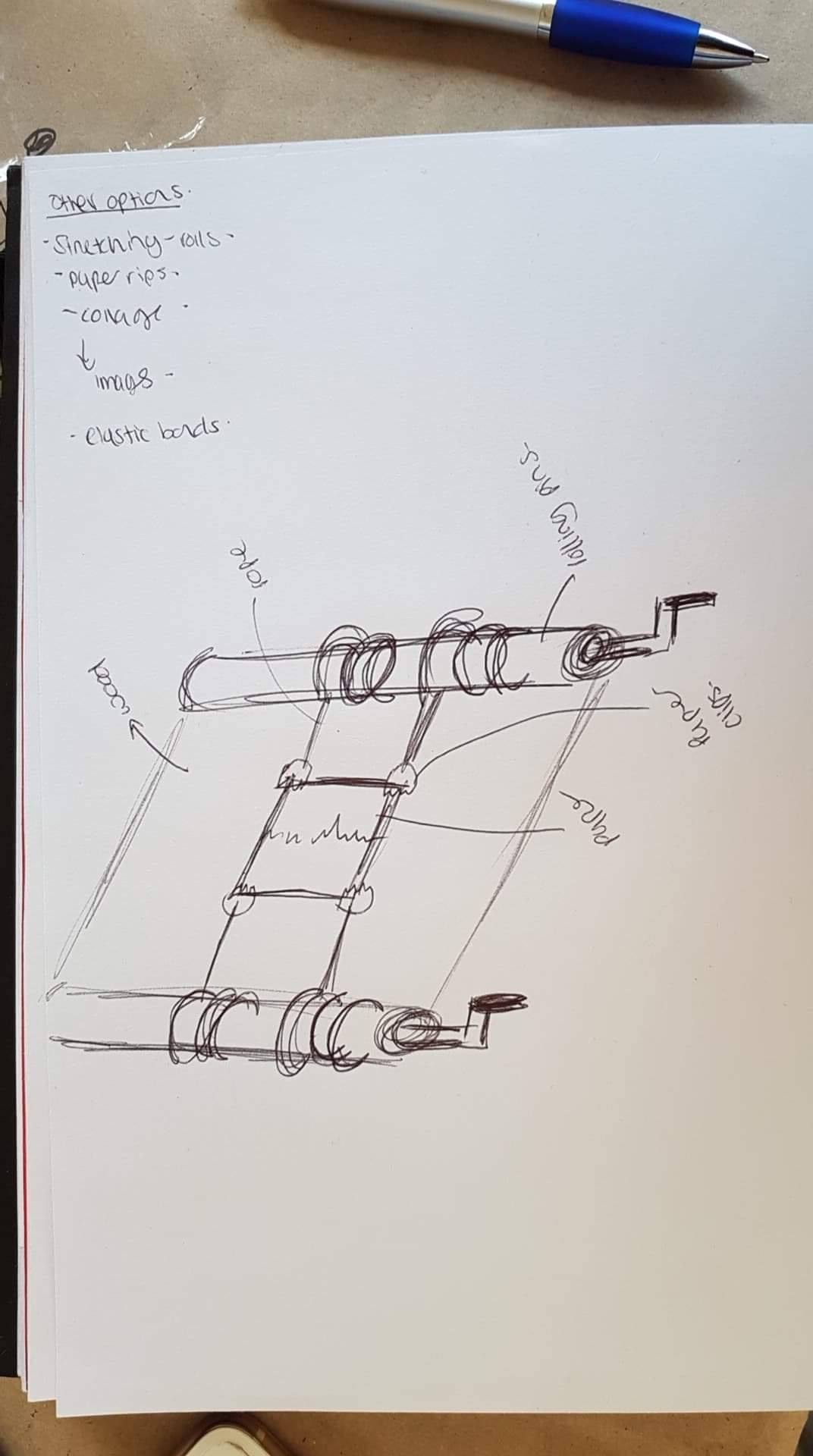
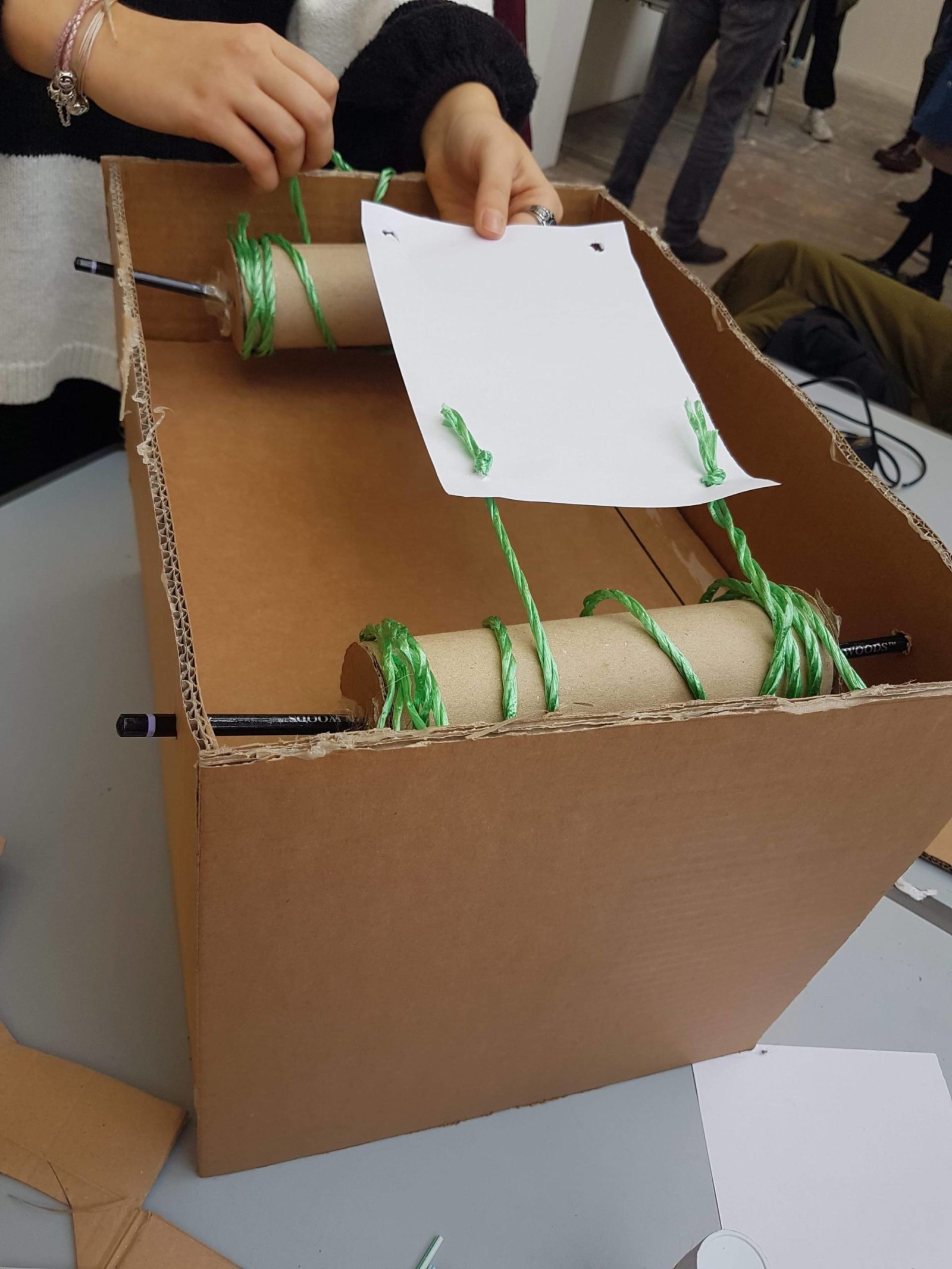
Our second prototype was made after taking inspiration from the rack – a rectangular wooden frame with a roller at each end. In medieval times a victims feet would be chained to one end while their wrists were chained to the other then the rollers would be gradually turned, increasing the tension on the chains resulting in the victims body being stretched and torn apart.
We planned to build a box with rollers embedded into it with lengths of rope or wire with clamps on the end attached to the two rollers. Paper would be held in the clamps and eventually torn apart by the turning of the rollers.
Error: No feed found.
Please go to the Instagram Feed settings page to create a feed.